#byronbaylawyer #probonocafe This is our Blog. The objective of this Blog is to provide comment and to help people access legal services and not sit on their problems or concerns. The Blog also covers our annual “Pro Bono Cafe” #probonocafe which format we invented, as well as other general posts and free pod casts and videos #byronbaylawyer . The Pro Bono Cafe is a totally free legal service provided by Tyndall & Co. and Tyndall Non Profit Inc. in the informal environment at the local cafe. Free coffee plus free legal advice. Tyndall & Co. also provides normal paid for legal services which is the main business of the firm and how it sustains itself. Read about the Pro Bono Cafe here.
You can search this journal by <Ctrl + F> on PC or <Command f> on a Mac.
January 2026, Sydney
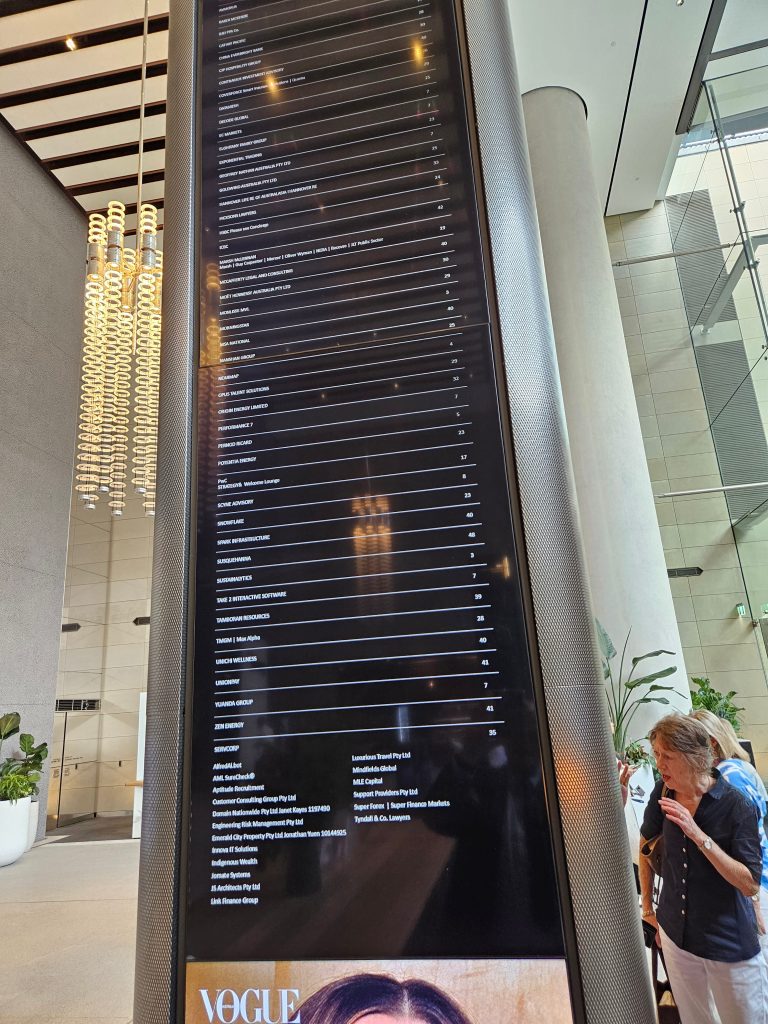
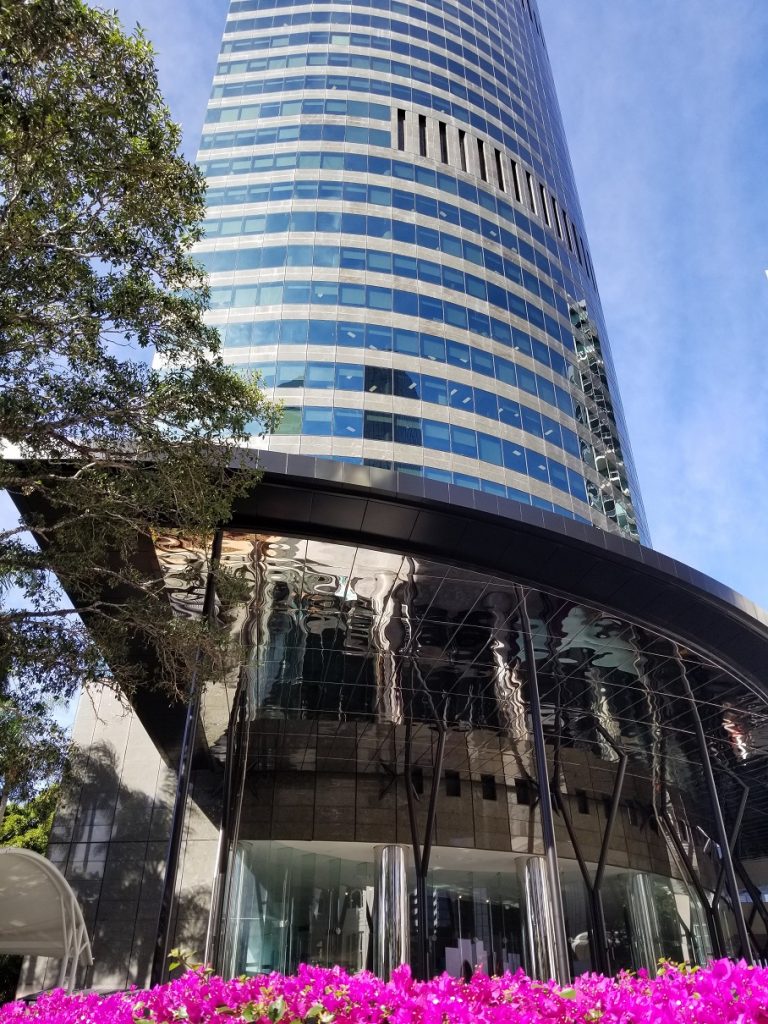
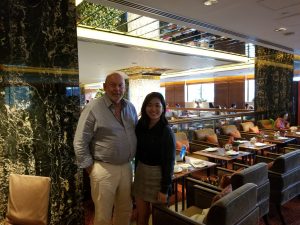
The Lobby of Tower One, Barangaroo, Sydney
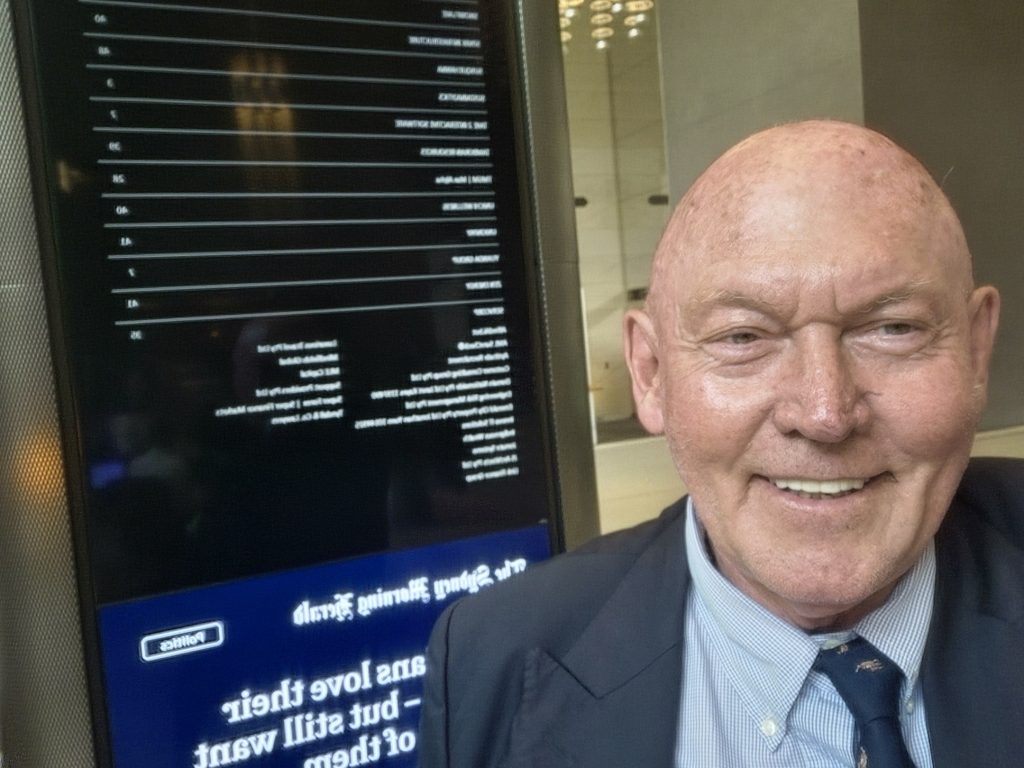
Jonathan in the Lobby on the Sydney office
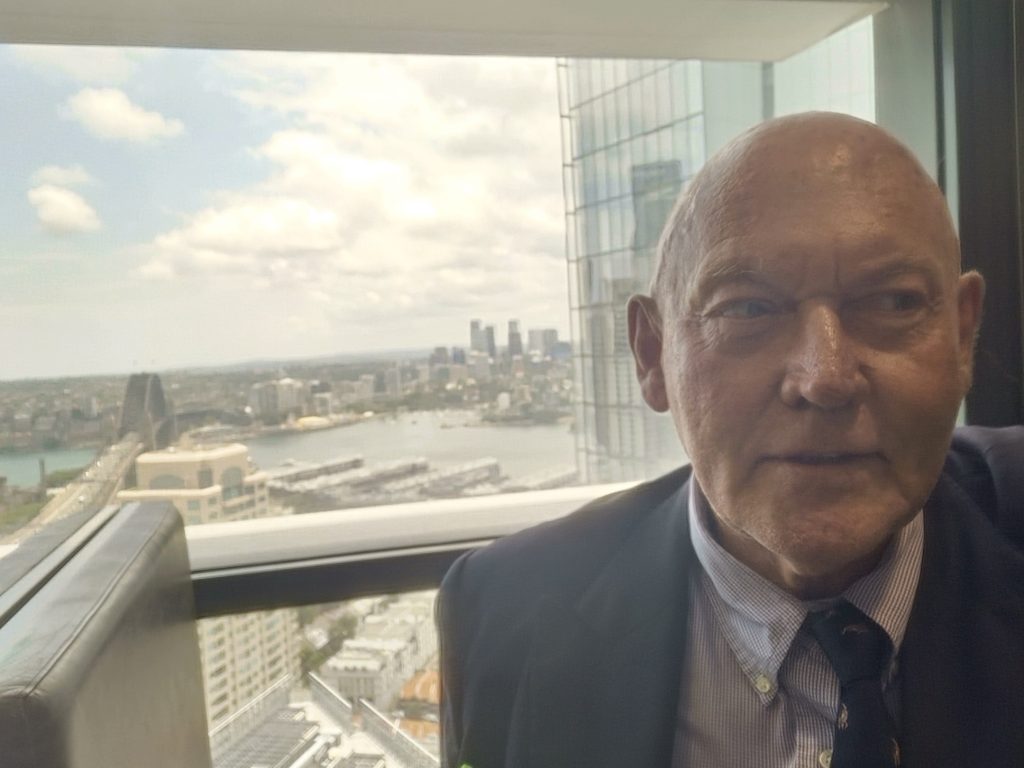
View from Level 35, Tower One, Barangaroo, Sydney
Jonathan on Level 35 just seeing some clients
17 & 24 November, 2025 Pro Bono Café, Byron Bay
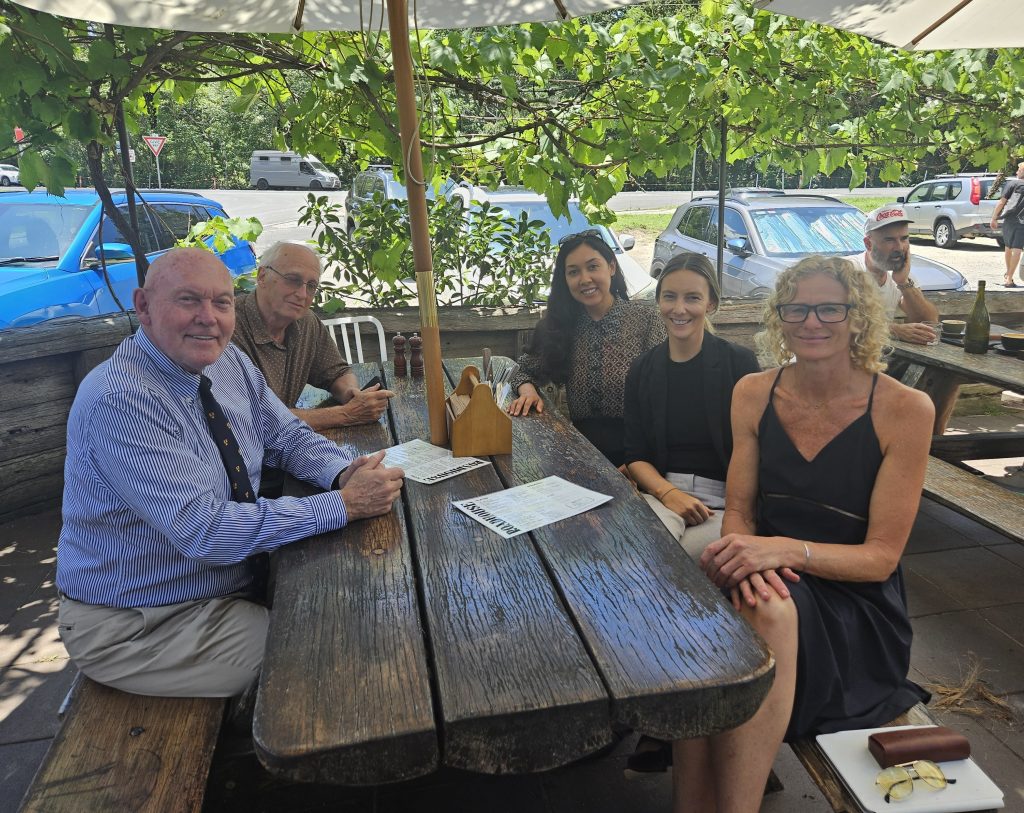
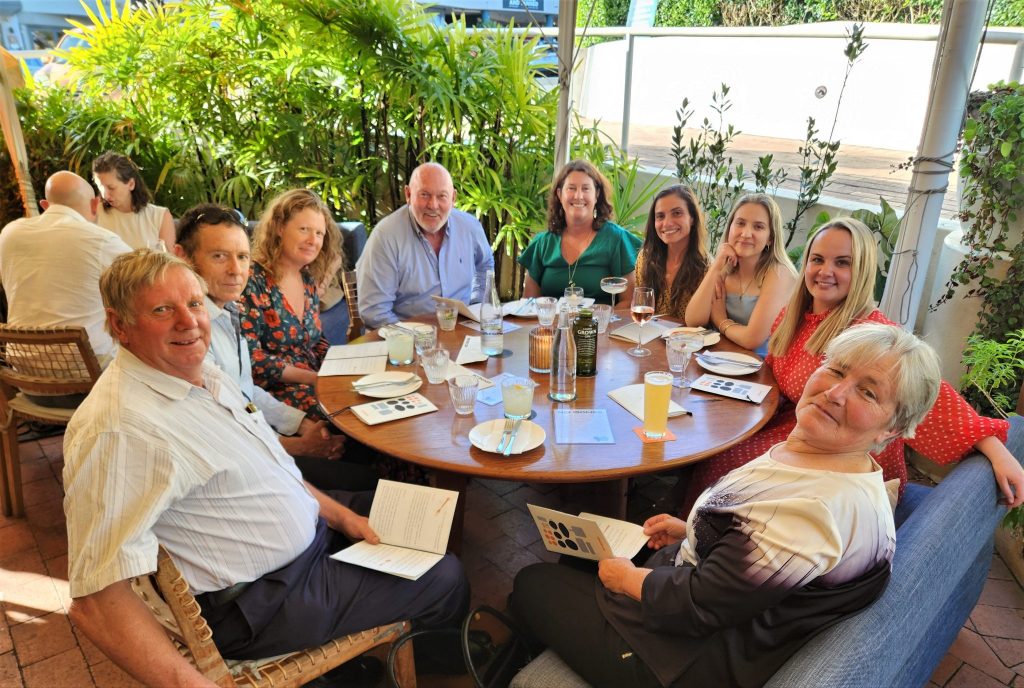
Image: The team at lunch on Day 2 of the Pro Bono Café- Jonathan de Vere Tyndall, Malcolm Voyce, Thais Soares, Tamika Crews and Jolene Winckel (Maddie, a student from Byron High School was not present in the photo, but assisted).
The 12th Pro Bono Café was an outstanding success. We ran it over the 2 Mondays in November at the lovely Roadhouse in Byron Bay. It was heavily attended and we met 21 new clients. There were a wide range of legal matters. These included Domestic violence, Elder law, Family law, Commercial law matters, Real property, Strata title, Wills and Estates, Family provision, Criminal law and Immigration. The feedback provided on the survey forms was outstanding, and a great community benefit. We finalised all the formal written advice letters and documents in the weeks to come and prepared all the Wills! The team who gave all their time for free at the Café was totally exhausted. But we were all satisfied that we had done our very best to help others and serve our community for another year, including those less fortunate or marginalised. Well done team.
THE SCOOP
______________________
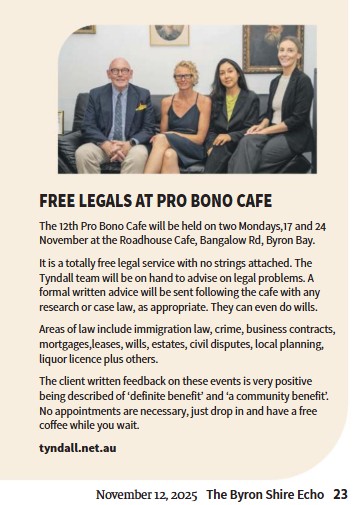
FREE LEGALS- PRO BONO CAFE
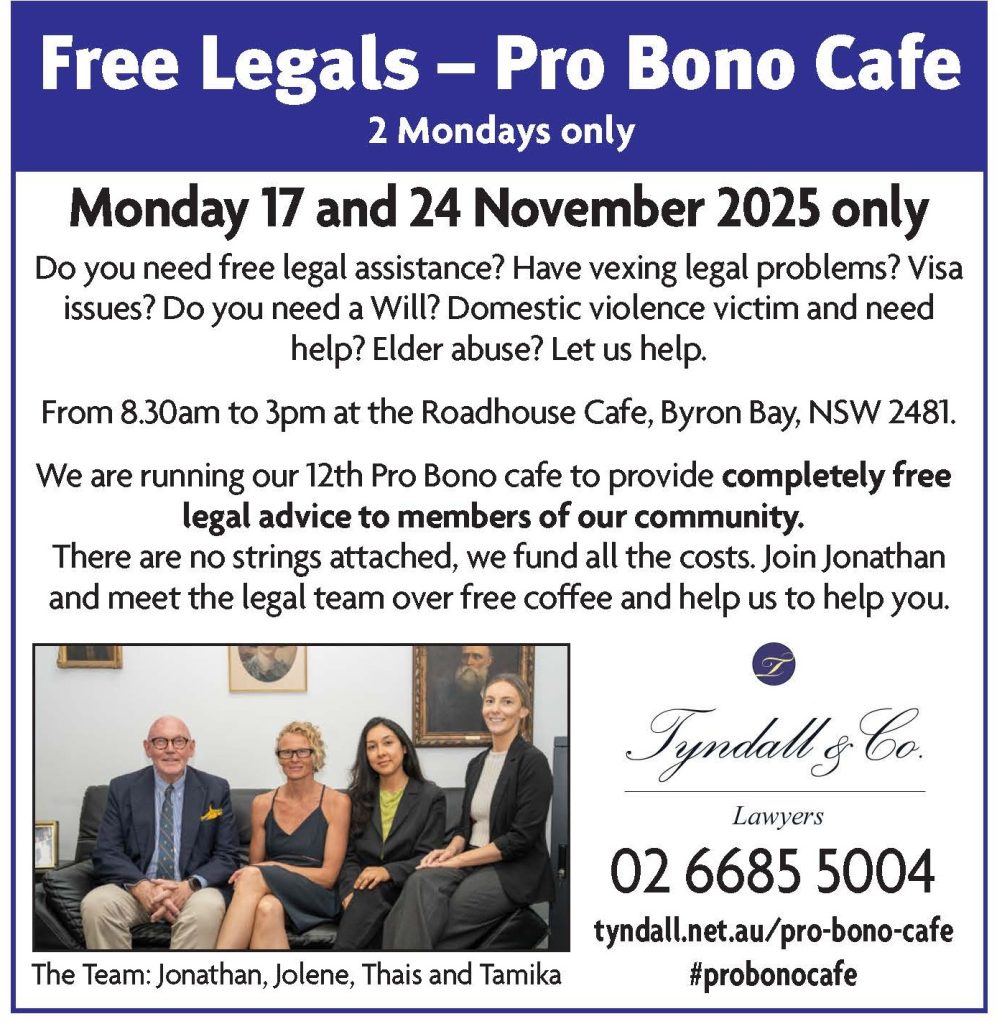
The 12th Pro 8ono Café will be held on 2 Mondays- 17 and 24 November 2025 at the Roadhouse Cafe, 6/142 Bangalow Rd, Byron Bay NSW 2481
It is a totally free legal service with no strings attached. The Tyndall team will be on hand to advise on clients’ legal problems. A formal written advice is sent following the conference with any research or case law appropriate. They can even do Wills.
The areas of law include immigration law, crime, business contracts, mortgages, leases, wills, estates, and civil disputes, local planning, liquor licence plus others.
The client written feedback on these events is very positive with often more than 95% approval rating of “definite benefit or worthwhile” and “a community benefit”.
No appointments are necessary just drop in have a free coffee while you wait.
Tyndall.net.au
Left to right:
Jonathan Vere Tyndall, Jolene Winckel, Thais da Silva Soares and Tamika Crews
Photo by Geoff
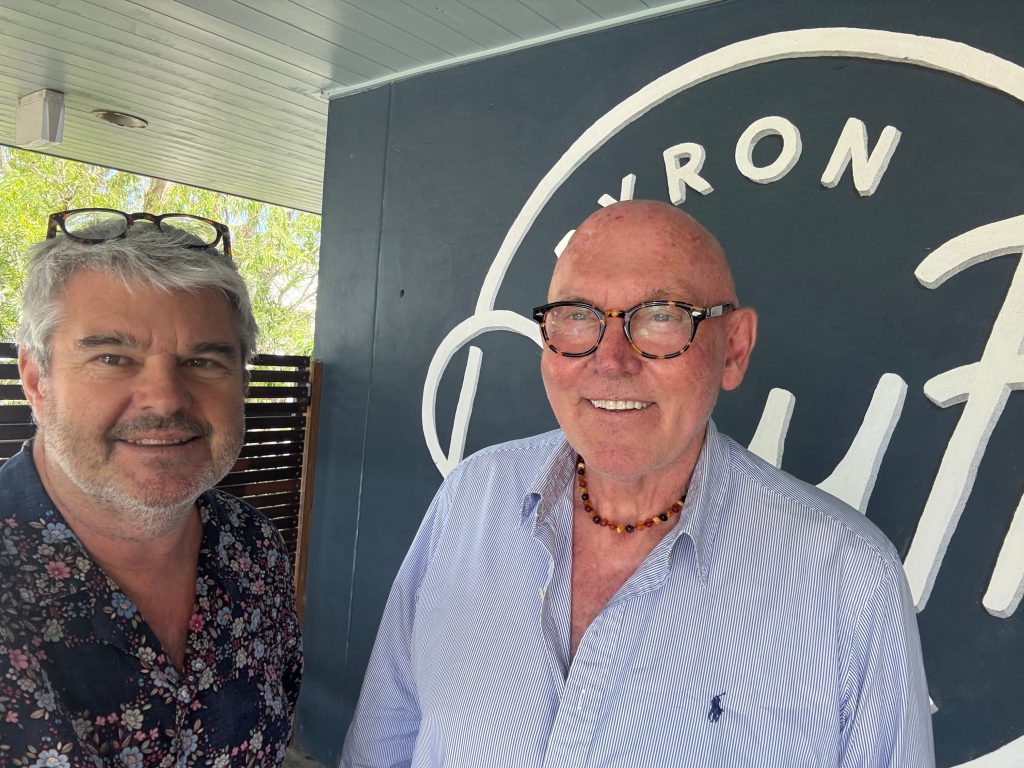
18 November 2025- Radio Interview
Jonathan attended a Radio interview with Nick Mercer on the “Beats and Business” Show at Byron Bay FM. Jonathan talked about his life and his career starting as a Barrister then becoming a Solicitor and starting the Pro Bono Café in 2009 after the Global Financial Crisis. Jonathan is based in Byron Bay.
September 2024
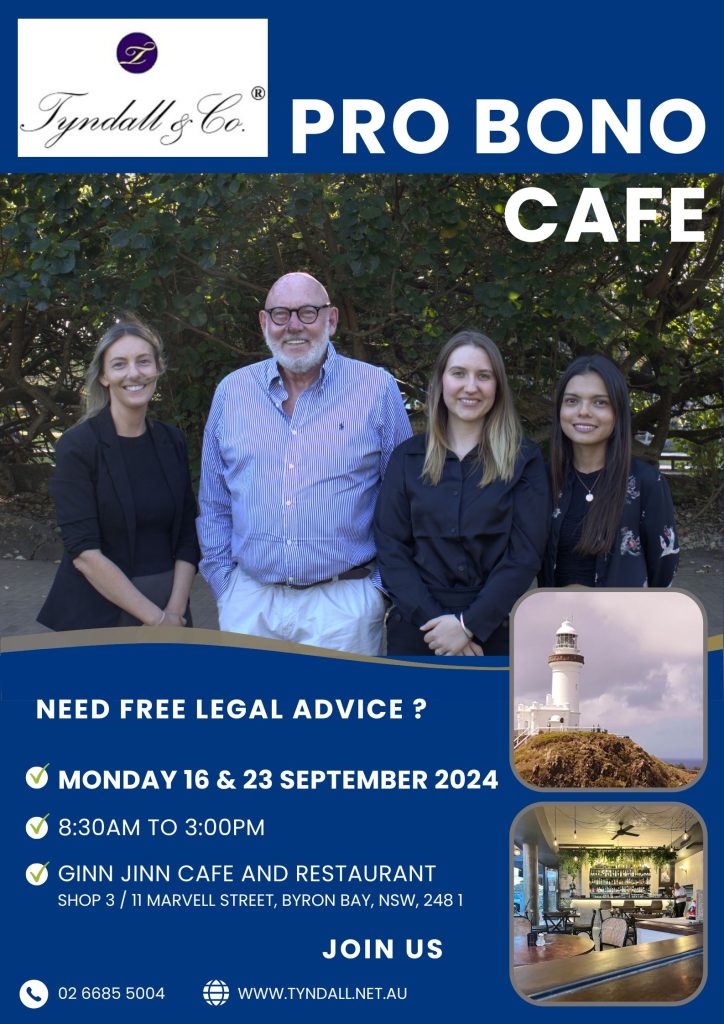
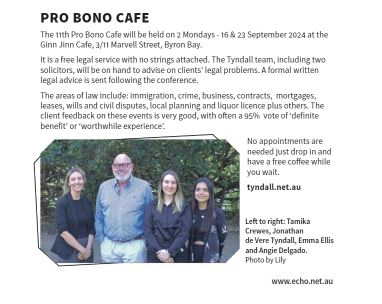
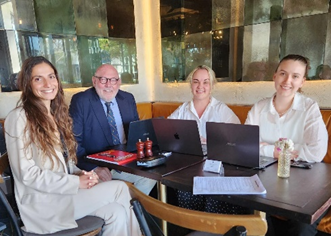
Image: Tamika Crews, Jonathan de Vere Tyndall, Emma Ellis and Angie Delgado at the Pro Bono Café 2024 in Byron Bay
The 11th Annual Pro Bono Café held on 16 & 23 September 20244 in Byron Bay was an standout success. We had 2 qualified Solicitors in attendance providing free legal help. Our team of Tamika Crews, Jonathan de Vere Tyndall, Emma Ellis and Angie Delgado all gave up their own time to attend over the 2 Mondays. We saw walk in clients with various legal problems over the 2 days. It took us another 2 weeks to finish off the formal written advices ready for other lawyers and send them out. These matters included an Industrial mater, involving large scale unpaid entitlements to workers, Family Law , Wills and Estates, a Coronial Inquest, an Employment contract Restraint of Trade clause and Immigration Matters. We received an amazing 100% approval rating from clients. We were once again thrilled to help out the local community and receive such positive feedback for our no strings attached service to the community.
Article The Echo 11 September 2025.
Pro Bono Café (Article text) The 11th Pro Bono Cafe will be held on two Mondays 16 and 23 September 2024 at the Ginn Jinn Cafe, 3/11 Marvell St, Byron Bay. It is a free legal service with no strings attached. The Tyndall team, including two solicitors, will be on hand to advise on clients’ legal problems. A formal written legal advice is sent following the conference. The areas of law include: immigration, crime, business, contracts, mortgages, leases, wills and civil disputes, local planning, liquor licences plus others. The client feedback on these events is very good with often and 95% vote of definite benefit or worthwhile experience. No appointments are needed just drop in and have a free coffee while you wait. tyndall.net.au Left to right: Tamika Crews, Jonathan de Vere Tyndall, Emma Ellis and Angie Delgado. Photo by Lily.
November 2023
The Pro Bono Café held on 2 & 9 October 2023 in Byron Bay was an outstanding success. It was our 10th annual Pro Bono Café. Our team of 4 gave up their own time and attended over the two very busy Mondays to help walk in clients. We saw 20 clients with various legal problems over the 2 days. We received an amazing 95% approval rating from those who participated. Clients also said it was a definite benefit to the community. All members of the Team were thrilled to help out and receive such positive feedback from the local community.
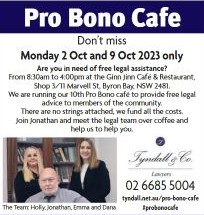
Image: Dana, Jonathan, Holly and Emma at the Pro Bono Café in Byron Bay, 2023
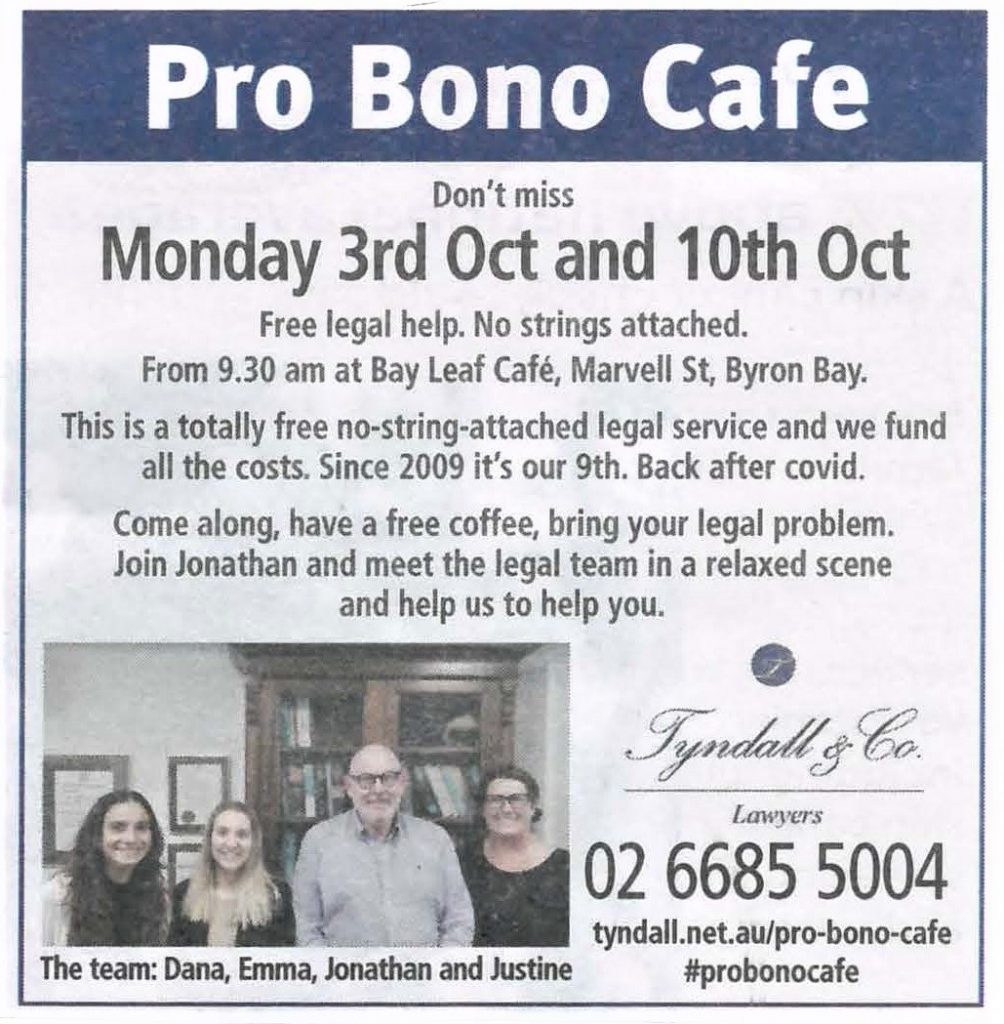
Ad promoting the event in The echo.
Editotial
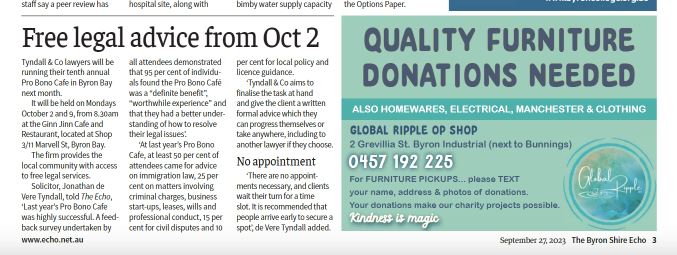
Free legal advice from October 2 Tyndall & Co. Lawyers will be running the 10th annual ProBono Café in Byron Bay next month. It will be held on Mondays October 2 and 9 from 8:30 AM at the Ginn Jinn Café and Restaurant located at shop 3/11 Marvell Street Byron Bay. The firm provides the local community with access to free legal services. Solicitor Jonathan de Vere Tyndall told the Echo, “last year’s Pro bono Café was highly successful. A feedback survey undertaken by all attendees demonstrated that 95% of individuals found the Pro Bono Café was a “definite benefit”, “worthwhile experience” and that they had a better understanding of how to resolve the legal issues.” “At last year’s Pro bono Café at least 50% of attendees came for advice on immigration law, 25% on matters involving criminal charges, business start-ups, leases, wills and professional conduct, 15% for civil disputes, 10% for local policy and licence guidance. Tyndall & CO. aims to finalise the task at hand and give the client a written formal advice which they can progress themselves or take anywhere, including another lawyer if they choose. No appointment- there are no appointments necessary, and clients wait their turn for timeslot. It is recommended that people arrive early to secure a spot” de Vere Tyndall added. Editorial Byron Shire Echo page 3 September 27, 2023
October 2023
Pro Bono Café -2023 – new dates now set for 2 & 9 October 2023 in Byron Bay at a local café. Hugely successful! It will be our 10th Pro Bono Café. Bring your legal problem. Let us help for free. #probonocafe #byronbaylawyer
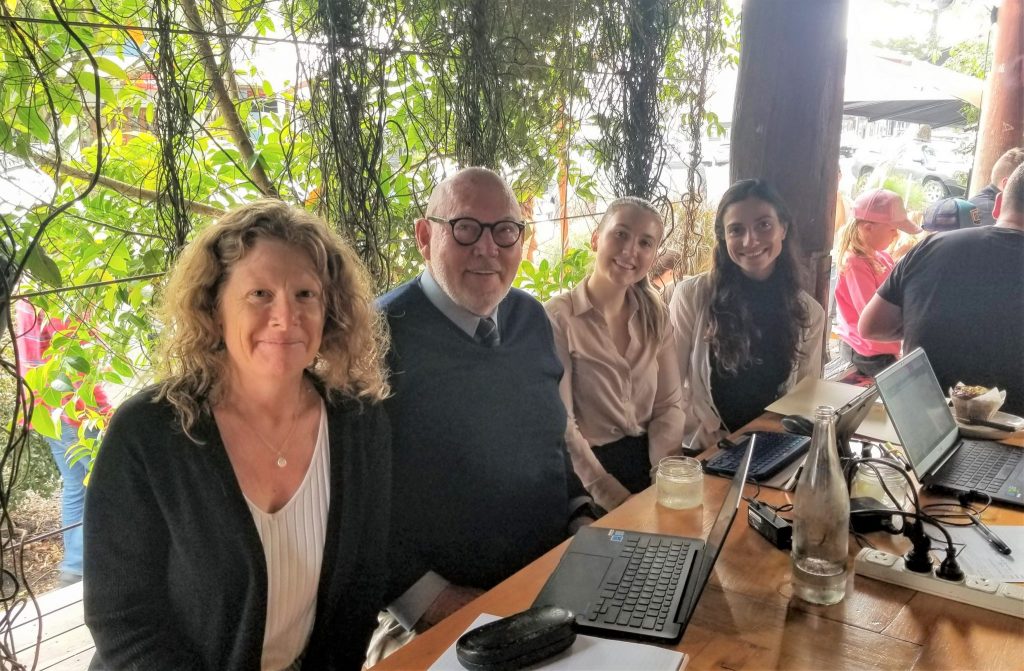
Image: Rachelle, Jonathan, Emma and Dana in action at the last Pro Bono Café 2022
June 2023
We have opened this month in Sydney at Barangaroo, International Tower One, where we will attend by appointment and depending on case load, as we are still based in Byron Bay where we have our main office.
December 2022, Byron Bay
Christmas lunch with the team and friends at No Bones, Byron Bay.
October 2022, Byron Bay
We ran the 9 th Pro Bono Café at the Bayleaf Café, Byron Bay over 2-3 weeks in October 22. We conducted individually 21 free legal conferences with clients and did 21 written advice follow ups after the 2 conference days and time spent in between on research and advice work. There was a wide range of matters, but the main issues were the after effects and impact of Covid restrictions on many people and their businesses and finances. The event was a huge success and very well attended. The feedback was very positive. Thank you team for your support.
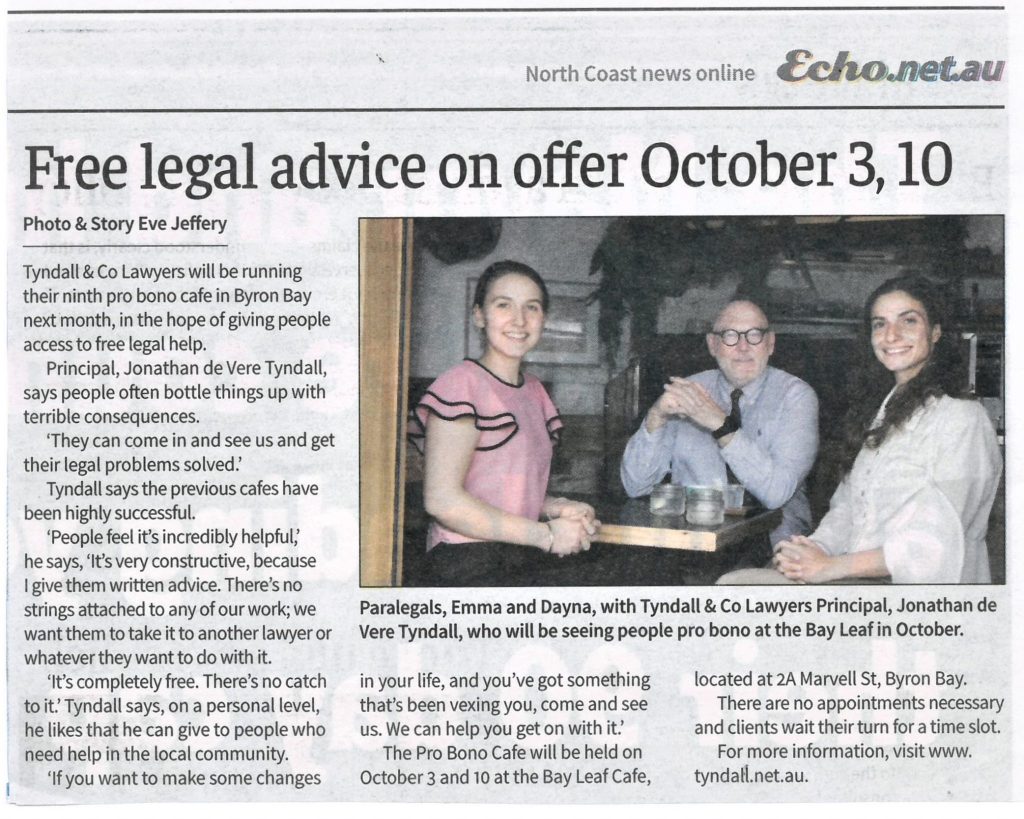
North Coast news online Echo.net.au
Free legal advice on offer October 3, 10 Photo & Story Eve Jeffery
Tyndall & Co Lawyers will be running their ninth pro bono cafe in Byron Bay next month, in the hope of giving people access to free legal help. Principal, Jonathan de Vere Tyndall, says people often bottle things up with terrible consequences. ‘They can come in and see us and get their legal problems solved.’ Tyndall says the previous cafes have been highly successful. ‘People feel it’s incredibly helpful’ he says, ‘It’s very constructive, because I give them written advice. There’s no strings attached to any of our work; we want them to take it to another lawyer or whatever they want to do with it.’ ‘It’s completely free. There’s no catch to it.’ Tyndall says, on a personal level, he likes that he can give to people who need help in the local community. ‘If you want to make some changes in your life, and you’ve got something that’s been vexing you, come and see us. We can help you get on with it.’ The Pro Bono Cafe will be held on October 3 and 10 at the Bay Leaf Cafe, located at 2A Marvell St, Byron Bay. There are no appointments necessary and clients wait their turn for a time slot. For more information, visit www. tyndall.net.au. Paralegals, Emma and Dayna, with Tyndall & Co Lawyers Principal, Jonathan de Vere Tyndall, who will be seeing people pro bono at the Bay Leaf in October.
October 2021, Brisbane
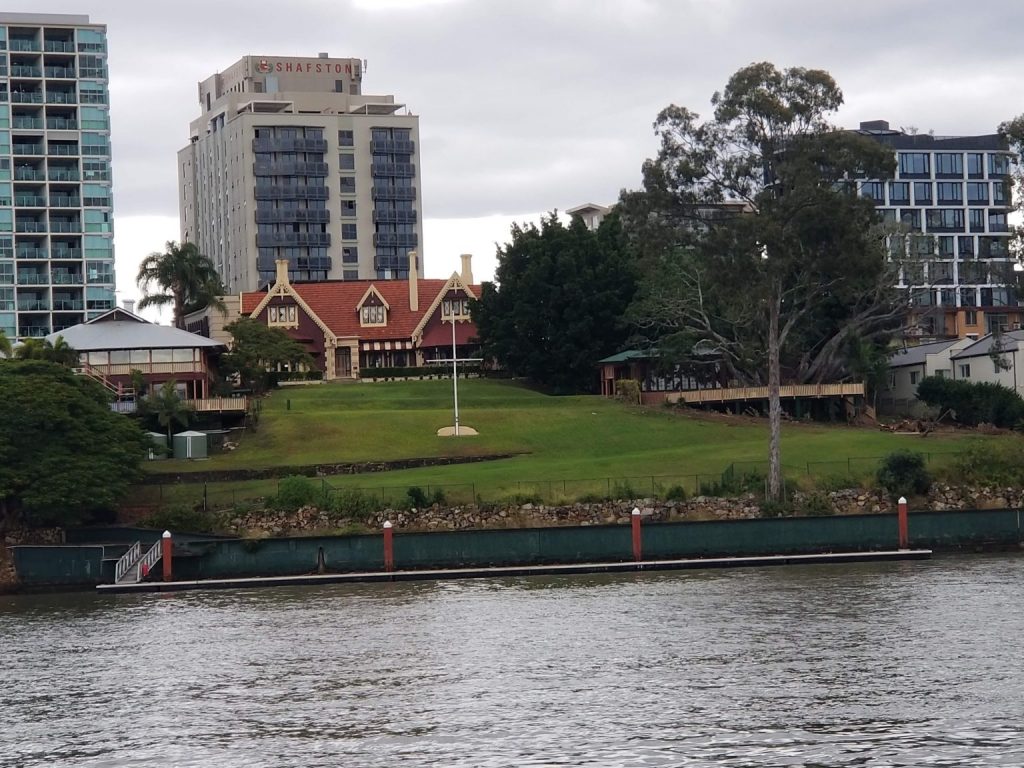
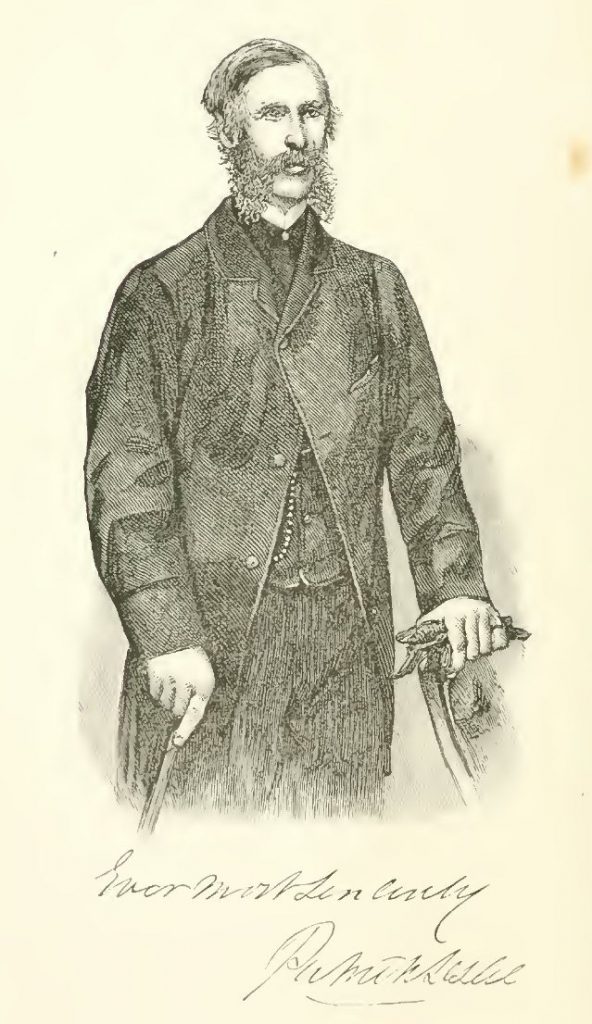
Shafston House, Kangaroo Point, Brisbane – Henry Stuart Russell’s house (Jonathan’s 2 greats grandfather) which was built in about 1852. It was on a riverfront farm of about 44 acres in Sydney. He was a Member of the Legislative Council of New South Wales; educated at Harrow and Oxford; an explorer of the Darling Downs, Wide Bay and the Mary River; and a pastoralist who also owned Burrandowan Station and Cecil Plains, named after his mother Cecil Charlotte Pemberton. He instigated the separation of Queensland from New South Wales in 1859 and seconded the motion in the New South Wales Parliament.
Portrait of Henry Stuart Russell taken from his book The Genesis of Queensland published in 1888
September 2021, Brisbane
The new Sydney branch at Waterfront Place, 1 Eagle Street with the view overlooking Kangaroo Point. It’s a great location and right in the CBD.
2020 – A radio interview with Jonathan about CUF’s (Cashed Up Folk) moving to Byron Bay
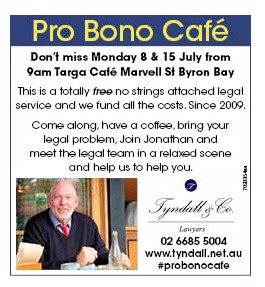
We held the 8th Pro Bono Café on two Mondays 8 & 15 July 2019. The feedback forms came back and it was a huge success with an overwhelming positive response.
FREE, no-strings-attached legal advice is always hard to come.
Thats why Johnathan de Vere Tyndall’s Pro Bono Cafes always draw a crowd with dozens turning up for last week’s at Targa Cafe in Byron to sit down with Johnathan and his staff.
Mr de Vere Tyndall said he and his team always look forward to the Pro Bono Cafe, “it’s real coal face law.”
“We have no idea what we are about to hear, we do the research then and there on the spot and present the client with a draft of advice that can be worked on later,” he said.
“Older clients are particularly concerned about wills and estate matters- either someone has died or is about to, and they feel they have not been given sufficient information about their rights regarding the estate.
“I also provide a lot of advice on family matters- often this can mean helping someone caught in an abusive relationship and wondering whether they should leave- and we try to be very supportive in these circumstances.
“And there are always questions about commercial and employment contracts.”
This was the eighth Pro Bono Cafe organised by Tyndall and Company Lawyers.
“We had 26 clients over the two days with 19 of those last Monday alone,” Mr de Vere Tyndall said.
“The overwhelming feed-back from clients was positive, many leaving the session with an increased sense of happinness.
“There were about three or four in the queue who were pressed for time and could not wait so we are happy to hear from those who queued up but missed out and offer them a free consult in the office.
“We took note of their names so they can just call us at the office to organise a pro-bono session.”
– For information call: 66855004.
Pro Bono Café 2019
#probonocafe
Announcing the 8th Pro Bono Café for two (2) Mondays 8 & 15 July 2019 atTarga Cafe, Byron Bay. It’s totally free. It’s loved. It’s effective. Bring your legal problem. No strings attached.
London Office
Right opposite Harrods in Knightsbridge SW3.
January 2019
Hong Kong Team
Meeting with our paralegal Rufina in Hong Kong December 2018
Update: 1st Monday, Pro Bono Cafe 2017
Last Monday, 15 May 20167 the team assembled for the first day of the two days of the 7th Annual Bono Cafe at the Poinciana, Mullumbimby. It was well attended and we had a lot of clients. The approval rating from clients was 100%. Here is a photo of the team who helped out:
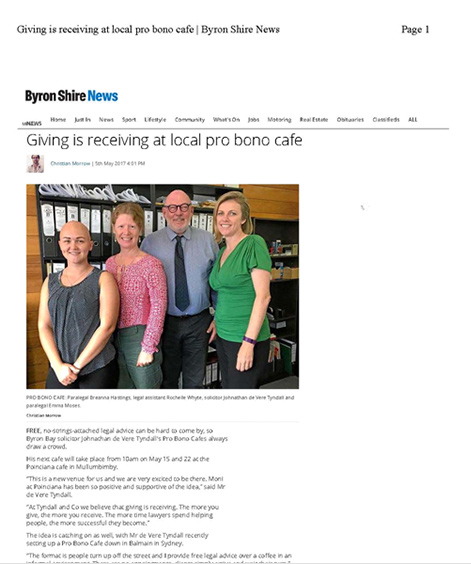
Image: From left to right, Breanna , Paralegal; Jonathan, Solicitor, Rachelle, Legal Assistant; Zoe, Solicitor; Emma, Silje and Daniella assisting.
We were happy to welcome Zoe, Silje and Daniella from Balmain who assisted us for the Pro Bono Cafe event and also observed.
Pro Bono Cafe 2017
Announcing the 7th Annual Pro Bono Cafe for two (2) Mondays 15 & 22 June 2017 at Poinciana Cafe, Mullumbimby. Its totally free. Bring your legal problem. Let us help you.
PRO BONO CAFE: Paralegal Breanna Hastings, legal assistant Rochelle Whyte, solicitor Johnathan de Vere Tyndall and paralegal Emma Moses. FREE, no-strings-attached legal advice can be hard to come by, so Byron Bay solicitor Johnathan de Vere Tyndall’s Pro Bono Cafes always draw a crowd. His next cafe will take place from 10am on May 15 and 22 at the Poinciana cafe in Mullumbimby. “This is a new venue for us and we are very excited to be there. Moni at Poinciana has been so positive and supportive of the idea,” said Mr de Vere Tyndall. “At Tyndall and Co we believe that giving is receiving. The more you give, the more you receive. The more time lawyers spend helping people, the more successful they become.” The idea is catching on as well, with Mr de Vere Tyndall recently setting up a Pro Bono Cafe down in Balmain in Sydney. “The format is people turn up off the street and I provide free legal advice over a coffee in an informal environment. There are no appointments, clients simply arrive and wait their turn.” Pro bono clients receive Mr de Vere Tyndall’s sole attention on a one-to-one basis. “I look at any legal matter including financial problems, debt, business issues, bankruptcy, family law, children’s care and parenting, loss of wages or termination, people disinherited from wills, criminal charges and immigration concerns,” he said. Tyndall and Co staff are also present to help with on-the-spot online legal research, note taking and preparation of a written advice. “More than 90% of matters are resolved at the conference with no need for the client to return,” he said. “In the instances where further legal work is required, the clients are given our written advice and they can then take that anywhere to engage a lawyer of their choice. “There is no charge and no obligation to brief our firm later on in any matter, nor is it supported by Legal Aid. This is an unconditional, no-strings-attached gift of free legal help.”
Advert 2016
Here when you need us Business law Family Conveyancing Criminal Law and Immigration Law
Pro Bono 2016 – total 159+ hours The figures are in! Tyndall & Co. contributed more than 159 hours in free pro bono legal work for the financial year ended 30 June 2016. This was achieved though the Pro Bono Cafe plus in house cases and law work done by the firm
BASED in Byron Bay, Tyndall & Co are solicitors and barristers experienced in business and commercial law, corporate law, family law, property law, trusts, criminal law, wills, offshore law and immigration law. They are also a registered Migration Agent and provide migration assistance and advice with all types of visa classes including online lodgment of visas and visa appeals, which can be lodged onshore or offshore. Their friendly local staff are keen to help you with all kinds of matters, even if it is just a will or conveyancing. The staff also give back locally to the community with a pro bono program that has been running for many years at a local cafe. “A local Casuarina man met with us at the Pro Bono Cafe seeking advice after his homeless sister had sadly recently passed away,” explained Megan Hoult and Jonathan de Vere Tyndall. “She died suddenly and had not made a will in her lifetime. She was survived by him and a sister from Queensland. “She had never married and had no kids. “Our client had used a superannuation search engine to locate his deceased sister’s two superannuation policies. One of the policies was worth over $50,000, and the other worth approximately $30,000. There was an included life and disability insurance policy with a combined total value in excess of $275,000. “The documents concerning these policies were yet to be obtained. He wanted to know whether without a will he was still entitled to the benefit of the estate. And he was. Pursuant to Sl29 of the Succession Act 2006 (NSW) the terms of Intestacy allow for the sibling to become entitled to the whole of the estate. “So this goes to show that a homeless person can be down, but don’t rule them out.” The names and details in this story have been changed in order to protect the identity of Tyndall & Co’s clients. If you would like to drop Into their office some time for a chat, they are located above Westpac Bank on Johnson St. Alternatively you can phone to make an appointment on 6685 5004. LAW AND ORDER: Jonathan de Vere Tyndall from Tyndall & Co.
Pro bono Cafe 2016 Report
Picture: Team- Rachelle Whyte, Jonathan de Vere Tyndall and Megan Hoult
The 2016 Pro Bono Café at Byron Bay was a great success and well attended. Clients brought their legal problems to the informal environment of the local cafe and our legal team helps them at no charge. It has been going since 2009 when we first started it.. Clients reported a very high approval rating to this free service for the local community. Issues included homelessness, disputes over wills, bank mortgage pressure, parenting rights, trust accounts, poor financial advice about loans, investment property woes, incorrect description of goods purchased and elder bullying.
No cash until the coffin A gentleman from Yamba came to the Pro Bono Café. He told us that he receives repeated requests from his daughter to “handover” the cash from the sale of his unencumbered property in Yamba worth approximately $1,000,000 and join her in a “new property investment” in Sydney. He would be guaranteed a granny flat in Sydney with this new investment until he passes away. Our client felt confused and conflicted by these demands for cash. Naturally he wanted the best for his daughter and wanted to help her and her family, but when this meant selling his home to help fund the purchase of her intended Sydney home, he became incredibly anxious. He told us that if he refused to comply with her request, he worried that when the time came for him to need nursing care, she may abandon him and leave him in an anonymous nursing home. He told us that there was an element of friction with the daughter’s partner that caused him further concern. We advised him that not only were there risks with this investment, there were risks that if his daughter’s relationship breaks down, his asset may be subject to a property adjustment in favour of the daughter’s partner. The daughter claimed to have $400,000 equity in one investment property and “successful” property ventures in Victoria. However there was absolutely no evidence of any success, no documentation of this had been given to our client and no explanation for the repeated demands for the $400,000. Many elders trust that their children are being transparent with their disclosure of their true financial position. This needs a reality check with the help of professionals, such as lawyers and accountants. This Yamba father left the pro bono café feeling empowered to make an informed decision which was right for him. Sadly elder abuse and bullying is becoming all too frequent in our society. Adult children are pressuring their parents to share with them the hard-earned equity from their family home before they die. Any person feeling such pressure from their children should seek the advice of a lawyer and an accountant. Children are typically the beneficiaries of their parents’ property. Kids should leave their parents to enjoy their own cash in the twilight years before it becomes time for a coffin. Back off kids, it’s no cash ‘til the coffin. Authors: Megan Hoult and Jonathan de Vere Tyndall (Names and details have been changed so as to protect the identity of our clients.)
CAFE CONFIDENTIAL: Jonathan de Vere Tyndall with Megan Hoult and Breanna Hastings.
VETERAN lawyer Johnathan De Vere Tyndall is once again offering free legal advice to people who lack the funds to pay for it. And it’s provided in a stress-free setting – over a cuppa at a local café. Jonathan opened his Pro Bono Café law office in 2009 and this year is making himself available for two days to anyone who turns up at Harvest Café in Newrybar. There are two Monday mornings offered: June 20 and June 27. Doors to the “office” open at 10am. Last financial year Jonathan’s firm contributed more than 188 hours in free legal work, helping people with financial and employment problems, business issues, family law, children’s care and parenting, disputed wills, criminal charges and immigration concerns. Jonathan says he is motivated by the belief that “giving is receiving”. “The more you give, the more you receive. The more time lawyers spend helping people who need it for free, the more successful those lawyers become.” The Pro Bono Cafe is not supported by Legal Aid, and many of clients couldn’t get it anyway. It is unconditional, no strings attached legal help. There are no appointments necessary: clients arrive and wait their turn. Staff are on hand to help with research, note-taking and preparation of written advice. There is no charge for any legal help provided and no obligation to brief the firm later on any matter. Even the coffees are on him.
Pro Bono Cafe 2016
Announcing the 6th Annual Pro Bono Cafe for two Mondays 20 & 27 June 2016 at Harvest Cafe, Byron Bay.
Pro Bono 2015- total 188+ hours
The figures are in! Tyndall & Co. contributed more than 188 hours in free pro bono legal work for the financial year ended 30 June 2015. This was achieved though the Pro Bono Cafe plus in house cases and law work done by the firm.
Testimonial UK meets NZ in AUS! A tropical wedding December 2014
Picture: From the London Eye in 2013 to a tropical wedding in Australia in 2014!
“I really want to make this testimonial because without the tenacity of you and your team J. and I would’ve have got to the position we are now in today and I know there are other couples out there that are going through exactly the same process and they need to know that there are people like you that go over and above to make things happen… My husband and I met, fell in love, he proposed…sounds simple! ..unfortunately I lived in the UK and he lived here in Australia so we made the decision that we would go through an immigration lawyer rather than try to negotiate the very difficult process of applying for a visa. We were beyond lucky to have found Jonathan from our first meeting he was able to answer all our questions and knew the best visa for us to apply for. Believe me emigrating here is not for the faint hearted but Jonathan and his dedicated team have been with us through every step and were always able to reassure me when I was stressing about the immigration office in the UK (which was quite often). Jonathan and his team have gone way over and above doing just their job description, contacting us and dealing with the visa out of hours, putting us in touch with our celebrant (who was also extremely professional) Jonathan and his team worked very hard on our behalf to make sure every detail was complete, every i dotted and t crossed in order for the visa to be granted first time. We cannot thank Jonathan and his team enough, he enabled us to realise our dream of becoming husband and wife and for us to begin our new lives together in Australia. He’s a brilliant lawyer but he is also approachable, practical, honest, realistic and has gone over and above to get us where we needed to be. Thankyou so much Jonathan and team for the best Christmas present Jason and I could ever have dreamt of. K. & J. December 2014” Congratulations to you both!
The 5th Annual Pro Bono Cafe at Harvest Cafe on 1 & 8 September 2014.
In September, we held the 5th Annual Pro Bono Café at Harvest Café, Newrybar. It proved to be a rewarding and beneficial experience for both the team at Tyndall & Co. and the community. A number of locals in need of some serious legal advice joined us for a coffee, with a number of attendees to the first Monday returning for a follow-up on the second Monday. The feedback received was extremely positive with all clients reporting that the pro bono conference was worthwhile. There was a varying range of legal issues. Here is a snapshot of some of the legal issues we advised on:
Wills and Estates
An executor of a will cannot simply assign their office to another person. Rather to ensure due administration of a will to which probate has been granted, the administration must be exactly in accordance with the grant of probate and will annexed to the grant of probate; or in accordance with Orders of the Court. Another Executor just can’t appoint another Executor willy nilly. A will comes into effect only upon the death of the testator. Therefore if a beneficiary predeceases the testator, and no provision is made for that event, the gift will be a failed gift by lapse. The Public Trustee may be a preferable option to be appointed as the executor of your will. This can minimise the possible impact of undue influence being exercised over a younger executor and beneficiary, so as to ensure that your testamentary intention is upheld.
Commercial Law
Before a contract is signed and entered into, it should be read very carefully. It is often worthwhile to seek a legal opinion on a contract before it is signed, especially if it contains something you are unsure about. If you do enter into a contract that is unclear and misleading, there may be grounds to rescind the contract. A contract for the sale of a business between a vendor and a business broker with a poorly drafted remuneration clause, an excessively high fee and an incorrect date is an example. A contract for the sale of personal property can be entered into verbally. Unlike a contract for the sale of land (with a few exceptions), it does not need to be in writing for there to be a valid contract. A contract is entered into at the place where it is accepted and that acceptance is communicated. If a person makes an offer over the telephone, then the place of the contract is the place where the person accepted it and communicated it to the offeror. Under S19 of the Sale of Goods Act 1923 (NSW) there are implied terms as a matter of law into every contract, including fitness as to purpose. This includes the instance where a buyer expressly or by implication makes known to the seller the particular purpose for which the goods are required so as to show that the buyer relies on the seller’s skill or judgment, and the goods are of a description which it is in the course of the seller’s business to supply.
Local Planning Law
Local Councils have in place planning rules, laws and regulations for property development. It is important that any land owner checks these laws and obtains the relevant consent before going ahead with any property development. If a person fails to check these laws and goes ahead with property development without the relevant consent, they will be in breach of Local Council planning laws. If this is the case they could be looking at a significant amount of money to become compliant. This is cumbersome for landowners who have spent their resources on developing the property. If the landowner is unable to meet the Local Council requirements this puts them at risk of having the development demolished and being sent a bill for the costs.
Employment Law
Decisions handed down by a Tribunal or Court are appellable within a certain time period following the date of decision. It is important to check these time periods to ensure that you have the chance to appeal a decision that you are not satisfied with. If the time period for the appeal of a decision has passed, there may be grounds to warrant a grant of extension of time. An employee who has experienced stressful employment which has had an impact on their health may be able to make a claim for Workers Compensation.
Migration Law
Migration Law in Australia is always changing. On 2 June 2014 the Department of Immigration and Border Protection repealed a number of family visas. Bringing a parent to Australia can be a lengthy exercise, or an expensive one. The Parent (non-contributory) visa carries an approximate current wait time of thirteen (13) years. The Contributory Aged Parent Visa carries a visa cost of approximately $43,000 in Visa Application charges. It may be worthwhile in some instances to explore the option of other visas as a pathway to permanent migration. We thank everyone who came along to the Pro Bono Conference and the team at Harvest Café who made the conference a rewarding experience.
Advertising for the Pro Bono Cafe August 2014
“Legal talks are free” -Article published Byron Shire News 24 July 2014
“Article text Jonathan de Vere Tyndall, local solicitor, barrister and migration agent, will host his fifth annual pro bono legal conferences over two consecutive Mondays on September 1 and 8 at Harvest Café in Newrybar. Mr de Vere Tyndall will be accompanied by his two paralegals, Annalise Roberts and Tessa Daly, at the sessions. The free legal conferences are being held to assist members of the community by offering legal and migration advice and preparation free of charge. The conferences will start at 10am on both days and the team will see attendees individually on a first come first served basis. They will be able conduct legal research on the spot electronically, and if necessary can see people at both sessions. “We want people of the shire and surround to come and meet with us in a relaxed environment, have a coffee and receive some legal help,” said Ms Roberts. For more information go to: https://tyndalls.au/blog/
June 2014- It’s on at the Harvest cafe again!
The acclaimed 5th Annual Pro Bono Law Café (since 2009) starts again for 2 Mondays on 1 & 8 September 2014 at Harvest Cafe, Newrybar near Byron Bay. This is a totally free legal service and we fund all the costs. The conferences have been highly effective, so clients report. We kick off at 10 am on both days. We will help with matters on a first come first served basis (no appointments). Our legal team (Jonathan, Annalise and Tessa) will be there for both days; and we can see you both days if necessary and do any preparation between the 2 Mondays’ conferences. The format is single client conferences, with electronic research done on the spot plus typed note taking which we send with our advice. This has proved to be a highly successful format in the past. Any other necessary work we can do between the Mondays. Come along, have a coffee, meet the legal team in a relaxed scene and help us to help you. Disadvantaged people suffering hardship are welcome.
Pro bono news flash! “In house Pro Bono”! April 2014
We have a strong history of providing pro bono (free) legal assistance to needy and disadvantaged people. Generally, we have done this in the informal environment of a cafe, on set days during the year, as an outside series of events of up to 8 weeks. But now we are changing the format. So as a pilot program we will be providing free legal help in house one (1) day a month at our offices in Byron Bay. Pro bono legal assistance is now available for people without sufficient financial resources on the last Friday of each month for the rest of this year. Bookings are essential, so call for an appointment. Just bring your legal problem and an open mind to try to fix it. In most cases we can and do help, and this is a fact from our own pro bono client surveys.
Anzac Day 2014
We will remember them! Anzac Day approaches on 25 April and we acknowledge the massive contributions of those who served, and those who now serve, in the armed forces. Lest we forget! Photo of the Cenotaph at Surfers Paradise QLD outside our offices in Cavill Avenue.
2013- This was a tough year for us, but the pro bono continued.
In 2013 we took on a number of pro bono cases for clients and achieved some great results for them. We did these jobs in house as ongoing matters, rather than as one off outside events. We have decided to trial a pilot program of “in house pro bono” (free) legal assistance and hope to integrate pro bono more into our normal work flow. This helps us save on the large cost of advertising of outside pro bono events in the media, which cost we tried (last year only) to recoup by a nominal charge. This pilot will eliminate the advertising cost outlay, which we were forced to wear.
December 2012- move to Byron Bay CBD
Jonathan has moved his law and migration practice from Eureka to Byron Bay CBD into new offices above Westpac at 75 Jonson Street. The new location makes him more accessible to clients around Byron Bay. He also now has an office at Broken Head on a by appointment basis to see clients. With the Cavill Avenue, Surfers Paradise office continuing, he can now offer a better service and easier access for clients. He looks forward to seeing and serving you at his new offices in 2013.
The “Law and You” conferences- start Monday 20 & 27 August 2012
These legal conferences are one-on-one conferences at a nominal fee of $50 (covers the cost of advertising, coffees) in an informal cafe atmosphere. We provide easy access at a (substantially) reduced cost to legal advice to assist clients find legal solutions and way out. Often clients have delayed taking action on an important matter for fear of being hit with high legal costs. This is an economical way for the client to decide if legal action is worthwhile.
Jonathan de Vere Tyndall has more than 20 years experience as a lawyer and has been both a barrister and a solicitor. He is also a registered migration agent. He works in the Byron Bay area from Eureka near Federal and also from Surfers Paradise on the Gold Coast. The type of problems he expects at conferences are: debt problems, collecting money owed, wills and estates, mortgages, bankruptcy issues, corporations and trusts, tax, crime and proceeds of crime, drink or drug drives, family law and parenting, employment law, and Australian immigration law, including all forms of visa classes (457 work visas, marriage and family visas, permanent residence) or review and appeal issues. He can help you. For 2 Mondays only at 10 am Harvest Cafe, Newrybar Call (02) 6688 2492(02) 6688 2492 to indicate interest and say hello. To get directions click on our contact page here, then on the map and type in Harvest Cafe.
Pro bono contributions for 2012
This year saw a large increase in straight pro bono work done from our law offices. Our clients were unable to wait until scheduled times. Some of the matters in which we were able to make positive contributions were as follows: a contested family law property adjustment matter involving a property purchased solely by the wife who was being harassed; joint ownership of land with a tax debt owed by one of the co-owners; a residential development of rural land where the owner developer was cash strapped and temporarily unable to complete the project which was intended for his retirement; discrimination by a quasi non government organisation (Quango); a Residential Tenancy Act dispute for a tenant. In all cases we were able to assist clients. There was one case of child born outside of Australia which I will describe in broad detail as this may help other women/children in similar situations who may think there is no recourse or that it is hopeless. It is not.
Family Law, Children & Citizenship
A non-resident foreign national mother gave birth to a child in a foreign country and was estranged from the father, who was uncooperative and violent. The child was conceived, but not born, in Australia by a father who was an Australian citizen. The mother left Australia for safety and went home while pregnant. The mother wants residence for the infant child, whose father is Australian but refuses to help. For a Child Visa (Sub Class 101 offshore, and Sub Class 802 onshore) the sponsoring parent must be an Australian citizen or permanent resident (or an eligible NZ citizen) and the child must be a dependent of the sponsor. The mother was not a resident and the child was dependent on her, not the father, and so unable to meet those criteria. However, a child born outside Australia and whose parent was an Australian citizen at the time of birth, and that parent has been lawfully present in Australia for 2 years , can make an application to the Minister to become an Australian citizen (SS15A, 16: Australian Citizenship Act (“ACA”)). If the infant child acquires citizenship, does Australian citizenship carry with it the automatic right of abode, so she can then lawfully live in Australia? The right of residence or abode is not expressly granted to an Australian citizen in the legislation :ACA, the Constitution or the Migration Act. Rather the right of abode exists because those Acts have no provisions which can remove, expel or exclude Australian citizens from Australia. They only regulate aliens, or non-citizens, relying on the constitutionally enumerated power in S51 (xix) with respect to “aliens”. So this is good news for the child. Also a parent living overseas can apply for child support if the paying parent is living in Australia, even though the receiving parent is living overseas, subject to meeting the CSA criteria including jurisdiction.
Pro Bono Conferences June 2012
The next- 4th annual- pro bono law conferences (free) are planned for June 2012 at Byron Bay and also Surfers Paradise. Any legal practitioners or law students interested in assisting us, please send us an email with your CV (Subject: Pro Bono). They will be the same format as usual, which are one on one legal conference(s) with a client in person (not phone or Skype), in an informal cafe environment, clients arrive at 10 am and then it is first in best dressed (unless there is a disability, health or age concern), with any follow up work completed prior to the following week’s further conference(s) if required by the client. Debt problems, mortgages, bankruptcy issues, crime, drink or drug drive, family law, parenting, employment law, and Immigration law, visa or review and appeal issues are all welcome. Details will be posted here when finalised and follow us on Twitter @tyndallco
October 2011 Pro Bono conference at Surfers Paradise QLD positive
Picture: Paralegals Madelaine and Sapphire in action at Bumbles Cafe, Surfers Paradise Pro Bono conference, with lawyer Jonathan de Vere Tyndall and client obscured
Mortgage Law
In the post GFC fallout, some borrowers or mortgagors strongly believe that they can avoid a claim for “possession” under a mortgage, and consequential liability, in Australia because the mortgagee does not have the “original wet ink” signature document. The concept is attributed to “foreclosure” cases in the USA, (Ibanez Case and others) in which some successful borrowers have won against bank mortgagees. However, in most states in the USA they have a different title system to Australia (“registration of title” rather than “title by registration” under the Torrens system). The practice of banks there has been to assign and sell mortgages on to investors, which leads to a “chain of title”. This belief is fallacious in Australia and it is also not constructive to successful resolution of a problem with a mortgagee, following default by the borrower. Bank mortgagees generally have the protection of an “indemnity clause” in the mortgage, so if a borrower takes such a matter on, they risk having to pay the bank’s full legal costs for running such a spurious claim and the bank having to defend it. An “all monies clause” will contractually allow a mortgagee to appropriate all balances, not just the mortgage account, so the borrower will also risk loss of any accounts in credit. There are more constructive approaches to take. See article here “Dry pen trumps wet ink“.
September 2011- Pro Bono at Surfers Paradise
A big thank you to Lucy Adhern of The Gold Coast Bulletin for covering the pro bono conferences and to Bumbles Cafe who have great coffee:
“Article text
Coffee and free advice
YOU may have already heard of tea and sympathy, but a lawyer has put a new spin on the concept and instead is offering coffee and free legal advice on the Gold Coast. Jonathan De Vere Tyndall will turn up at Bumbles Cafe in Surfers Paradise n September 6 and 13 to dish up pro bono legal assistance to those who need it. Mr Tyndall operates on the Gold Coast and in Byron Bay and has already rolled out the concept across the border. The qualified solicitor and barrister has experience in a wide range of areas, including family law, crime, immigration and bankruptcy.”
6 & 13 September 2011- Announcing the September 2011 Pro Bono Law Conferences at Surfers Paradise QLD
These Pro Bono (free) Law Conferences will run for the first 2 Tuesdays in September 2011.
Start: Tuesday 6 September, 2011 and then 13 September 2011
For 2 Tuesdays only • At Bumbles Café, Surfers Paradise from 10 am
All legal issues dealt with including: personal bankruptcy and company insolvency, family law and shared parenting or property disputes, loss of job or unpaid entitlements or unpaid superannuation, potential loss of home and mortgage problems, Wills and unpaid provision, crime including drink or drug driving and Australian immigration law and visas.
Be there at 10 am, first come first served (unless there is a disability or urgency), no appointments necessary
We encourage you to come on the first Tuesday so you can return on the following Tuesday for follow up work on your legal issue. We look forward to being of service to you.
August 2011- The 3rd Annual Pro Bono Conferences finish with a smashing success!
Picture: Left to right: Paralegals Gloria, Candice and Madelaine, with lawyer Jonathan de Vere Tyndall
This year more than 18 individual pro bono legal conferences were conducted at the café and at our offices. Clients overall reported positive benefits, and we were able to help with many pressing matters and increase client happiness. It was a smashing success! Many thanks are given to paralegals Gloria, Candice and Madeleine for their outstanding efforts and also the staff at Harvest Café Byron Bay for their great service. The matters included the following legal principles:
Bankruptcy Law
The ‘Bankruptcy Act’ in Part IX allows for an insolvent person to make a “debt agreement proposal” to the Official Receiver for the creditors if the total unsecured creditors are less than the prescribed amount of $92,037. This will stop bankruptcy if the more than 50% in the value and number of the creditors will vote for the proposal, which will include a discount on the total amount owed to all creditors proportionally and time to pay the debt over a number of years. It is a less demanding process than a Part X “personal insolvency agreement” which requires a special resolution with more than 50% in number of creditors, plus at least 75% in value to approve the proposal.
Family Law
With a “parenting order” made under S65D of the ‘Family Law Act’ the Court must consider the best interests of the child as paramount in determining whether the child should spend ‘equal time’ with each of the parents, or ‘substantial and significant time”. The Court must have regard to what is reasonably practicable, including how far the parents live from each other, and the parents’ current and future capacity to implement an arrangement. If the child goes missing, then a parent can seek a “location order” for the Court, or a “recovery order” (S67Q) seeking the return of the child. A parent must not refuse or fail to deliver a child or interfere with the performance of any duties that person has under the order (S65M); and not hinder the child from communicating with the other parent under the order. (S65NA) The Court has the power to issue a warrant for arrest of an “alleged offender” to bring them before the Court. If a parent is being unreasonably hindered in telephone access or being refused time with the child under a parenting order, these matters can be enforced and are not trivial. It is important for the evidence to keep notes of dates and times of specific breaches.
Wills and Estates
A child who has been expressly disinherited in a Will because of an alleged failure as a less than dutiful child, may have recourse under the ‘Succession Act’ (NSW) as an “eligible person” [S59 (1) (c)] for adequate provision for “maintenance, education and advancement in life”. A claim for provision must be made within 12 months from death. Such a clause in a Will may have the opposite effect to that which the testator intended. Instead of striking out the child and discrediting him, it may instead pave the way for the claim. The Court puts itself in the position of the wise and just testator.
Constructive Trust
If a child loses the right to claim family provision under the ‘Succession Act’ 1981 (QLD) (S44: claim must be made within 9 months of death) due to the length of time since the death, there may be promises made by the deceased to the effect that she would leave certain property to the child. In such as case, the Court could impose a “constructive trust” over the deceased’s property where it would be unconscionable to deny the trust. Whilst statutory rights might be lost, equitable rights can survive.
Employment Law (Industrial Law)
An employer, who pays a “contractor” for services -even with an ABN- is required to pay the “superannuation contributions” for the contractor, if the services are predominantly personal. [Superannuation Guarantee (Administration) Act 1992, S 12 – Contractors providing predominately personal services are “deemed employees” for the purposes of superannuation] If a contractor is really a worker (as found by the Court), a claim can be made out under the Fair Work Act in the “general protections” provision for other Award based entitlements, including annual holiday leave and unpaid overtime.
Australian Immigration Law
A skilled worker from overseas who meets certain criteria can obtain a “Subclass 457 sponsored visa”, which is a temporary business visa, if the employer nominates as a “sponsor” and they also meet certain criteria. The worker can then later apply for a “permanent” visa within 12 months to 2 years after taking the post. The worker’s family can also enter or stay on that visa. The worker and the sponsor can apply onshore, and don’t have to leave Australia to apply for the visa, if the worker is lawfully present on another visa subclass. This fast track to residence pathway increases an Australian employer’s access to overseas skilled labour markets, which may provide the skill sets needed for the survival of the business in Australia but at the same time giving a fair go to Australian workers. It is attractive to overseas skilled workers because they can obtain a pathway to “permanent residence” if they meet the DIAC criteria.
July 2011- Northern Star- Local lawyer offering free legal advice
Article: Northern Star 27/7/11 p.24 “Article text THE BACK FENCE Edited by TRACEY HORDERN To contact Tracey, phone 6620 0593 or email your stories and pictures to backfence @northernstar.com.au Local lawyer offering free legal advice in a coffee shop WE’VE ALL heard the lawyer jokes, but like any profession, they are some great guys out there who know the value of giving back. One is Jonathan de Vere Tyndall. Mondays at Harvest Cafe in Newrybar sees Mr de Vere Tyndall and his team offering locals pro bono (free) legal advice. This fantastic community service of pro bono conferences is available for the next two Mondays from 10 am, on a firstcome-first-served basis. Mr de Vere Tyndall has a team of young law students from SCU and Bond University assisting him and gaining experience as readers and researchers to speed the process.
“I find that people respond to the informal environment of Harvest Café to deliver the free service of legal advice,” said Mr de Vere Tyndall. Some of the issues dealt with include help with wills, bankruptcy, drink and drive offences, immigration issues and family breakdowns. The next conference is Monday, August 1 and the last is Monday, August 8. Mr de Vere Tyndall is principal of Tyndall & Co Lawyers based in Federal with a new branch office in Surfers Paradise at 46 Cavill Ave. For more information go to www.tyndalls.au/blog Tracey Hordern backfence@northernstar.com.au ”
TOP 11 things to do this weekend 23 July 2011- Northern Star
“Article text Believe it or not it’s first come, best dressed at the Harvest Cafe, Newrybar, on Monday morning, July 25, when lawyer Jonathan Tyndall will dispense advice pro bono. Clients should arrive at 10am to receive help with wills, bankruptcy, loss of home, relationships and kids, drink or drug driving and immigration law. There will be follow-up sessions for the following two Mondays. Go to tyndalls.au/blog for more details.”
Byron Shire Echo 19 July 2011 p.49
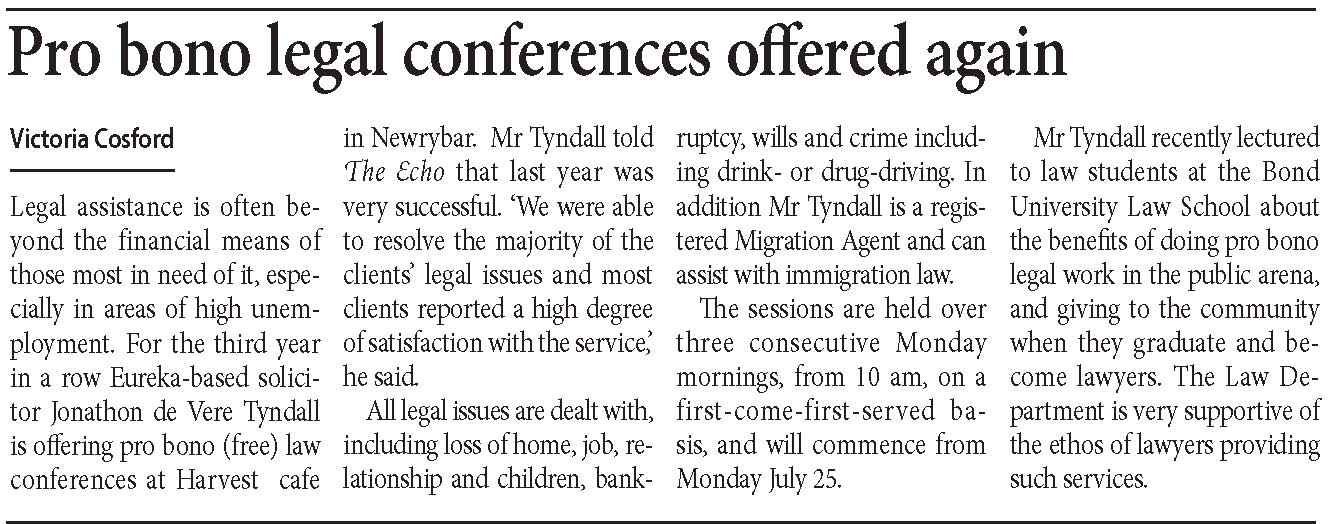
“Article text Pro bono legal conferences offered again Victoria Cosford Legal assistance is often beyond the financial means of those most in need of it, especially in areas of high unemployment. For the third year in a row Eureka-based solicitor Jonathon de Vere Tyndall is offering pro bono (free) law conferences at Harvest cafe in Newrybar. Mr Tyndall told The Echo that last year was very successful. ‘We were able to resolve the majority of the clients’ legal issues and most clients reported a high degree of satisfaction with the service,’ he said. All legal issues are dealt with, including loss of home, job, relationship and children, bankruptcy, wills and crime including drink- or drug-driving. In addition Mr Tyndall is a registered Migration Agent and can assist with immigration law. The sessions are held over three consecutive Monday mornings, from 10 am, on a first-come-first-served basis, and will commence from Monday July 25. Mr Tyndall recently lectured to law students at the Bond University Law School about the benefits of doing pro bono legal work in the public arena, and giving to the community when they graduate and become lawyers. The Law Department is very supportive of the ethos of lawyers providing such services.”
July/August 2011 Pro Bono
The (3rd) Annual Pro Bono (free) Law Conferences at Byron Bay are starting again this month, and the details are as follows: • Start: Monday 25 July, 2011 then 1 August and 8 August 2011 • For 3 Mondays only • At Harvest Café, Newrybar from 10 am • Clients should be there at 10 am, first come first served (unless there is a disability) • Recommended to come on the first Monday in case the client needs to return on later Mondays to follow up necessary work • All legal issues dealt with including: loss of home, loss of job, breakdown in relationship, children and shared parenting disputes, wills, personal bankruptcy, company insolvency, crime including drink or drug driving and immigration law. Jonathan de Vere Tyndall will be conducting the free conferences. He is a Solicitor and also a registered Migration Agent. Past conferences have been heavily attended. Last year (2010) was very successful and we were able to resolve the majority of the clients’ legal issues at the conferences and most clients reported a high degree of satisfaction with the service.
The University of the Third Age – paper delivered 22 February 2011
Jonathan delivered a paper as a guest speaker at the University of the Third Age (U3A) Brunswick Heads on 22 February 2011 on “Why should lawyers give more of their time for free?” A copy of the Paper of 22/2/2011 is here. He also gave a free talk to seniors about Elder Law issues, Wills, Intestacy and Family Provision. The group were very appreciative and said: “Thanks to you they now have a better understanding of many legal matters that could have worried them…Many problems of older people you helped put to rest as well as family involvement issues.” The lecture was scheduled for about 1 hour and lasted 2 hours or so! The group were very responsive and quick to pick up on issues and Jonathan looks forward to his return.
December 2010 Pro Bono
Jonathan conducted a repeat of the annual pro bono law conferences he sponsors on two consecutive Mondays at the Harvest Cafe in December just before Christmas 2010. They were well attended by clients, who reported positive benefits. One client said:
“I recently attended a session with Jonathan Tyndall at Harvest Café. During the session I got complete attention from Jonathan and his two very competent assistants, information, suggestions, encouragement, practical advice and compassion. With my improved morale after the meeting I was able to take some long-delayed action, that very same day, gaining much clarity and empowerment in my situation. I am very grateful to have had the opportunity to talk with a professional and to know that an excellent mind is zooming in on my predicament, with no other motive than to help. Thank you.” LC. Many thanks to my two work experience readers Lucinda from Griffith University Law School and Iris from Bond University Law School, who both worked diligently over the 2 weeks including between conference days on follow up research and the staff at Harvest Cafe who were most supportive of all attending and welcoming.
Free legal conferences available 2010 – Byron Shire Echo 7/12/10 @ p. 7
“Article text Free legal conferences available Harvest owner Tristan Grier, work experience law student Rebecca and Jonathon de Vere Tyndall . Photo supplied. Victoria Cosford Free-of-charge pro bono law conferences will once again be offered by Federal-based solicitor Jonathon de Vere Tyndall. Held at Harvest Cafe in Newrybar, their aim is to help people in need with legal problems like bankruptcy, loss of home and job disputes. Both commence at 10 am and will be held on Monday December 13 and Monday December 20. These cafe conferences proved enormously successful last year, when Jonathon conducted a series of eight in all, totaling 60 one-on -one sessions. According to a survey he conducted afterwards, the ‘overwhelming response’ was that they had been of definite benefit to those attending with legal problems, giving them a better idea as to how to resolve their legal issues. Jonathon told ‘The Echo’ that ‘most surveyed found that their happiness was enhanced’. He said that ‘Christmas is a time of giving but it is also a time of great stress financially and with family issues. I am always busy at Christmas time unfortunately’. For further information and bookings call Jonathan on 6688 2492 or 0439 651 813.”
“Article text Lawyer offers free advice 9th December 2010 Lawyer Jonathan de Vere Tyndall is holding two pro bono (for the public good) sessions at Harvest Cafe, Newrybar on Monday, December 13 and 20, from 10 am. Interested people should just turn up to the cafe and will been seen on a first-come-first-served basis . “I’m doing this to help people,” Jonathan said. “It’s been a time of great difficulty. With the Global Financial Crisis people are experiencing a lot of problems, familial, financial and personal so I’m doing this, basically to help.”
“I can help people with things like concerns about debt, bankruptcy, insolvency, loss of home from banks, credit problems, family law problems, and industrial law problems.”
“Particularly around Christmas, although it’s a time of giving, it can also be a time of great stress, where things can come to a head with financial problems and people don’t know what to do.”
“Some people can’t get Legal Aid so this is something where a lot of problems can be helped resolved.”
Jonathan is on the Legal Aid panel, for civil, family and children. For more information phone Tyndall & Co Lawyers on 6688 2492 .”
June 2010 Law Student wanted
We have another paid position available for a part-time Law Clerk-Paralegal. The job specification is 2-4 mornings a week. The job will suit a law student who wants legal experience in working on actual client cases, who has advanced research skills and is familiar with electronic case law data bases. There are excellent prospects for improvement and with getting involved in building cases and proofing up evidence in a small but “flat” adversarial organisation. You don’t have to be an HD student but compassion, a keen sense of justice for the client’s rights and positive belief in the “pro bono law” system for disadvantaged people, are essential requirements for the position. We pay top rates. Please apply with CV and references, quoting Law Student Wanted
Bond University Law School October 2009
Jonathan de Vere Tyndall was invited to lecture to law students at the Bond University Law School about the benefits of doing “pro bono publico” legal work. He delivered a Paper 21 Oct 2009 here.
His thesis is that the genuine act of giving is also receiving, but by giving what you are receiving is multiplied. Others will also benefit in the process. There is a net benefit to the individual who gives and the community which receives. By giving free legal help, you will become more successful as a lawyer.
Pro Bono at Harvest Cafe- September 2009
Jonathan de Vere Tyndall concluded a series of 8 weekly pro bono legal conferences at the Harvest Café, on consecutive Mondays. He conducted in excess of 50 “one on one” pro bono law conferences.
The overwhelming response from clients was that it: 1. Was a definite benefit to people attending with legal problems 2. Gave them a better idea of how they could resolve their legal issues 3. Was a great idea. Most clients surveyed found that their happiness was enhanced. Many legal issues were able to be resolved. Jonathan also tutored law students South Cross University and Griffith University, who needed practical experience during the conferences. One law student who attended said it was “inspirational”. Since concluding the series, we have received many further enquiries for another pro bono conference series and are considering dates for the next series in 2010.
The Pro Bono cafe – Byron Echo 25 August 2009
“Article text Lawyer offers pro bono conferences Victoria Cosford Eureka solicitor Jonathon Tyndall’s offer of pro bono legal conferences has so far proven of significant benefit to its recipients. Conducted at Newrybar’s Harvest Cafe on Monday mornings, they are one-on-one sessions each lasting around two hours.
According to Jonathon, of the 21 conferences he has conducted, all except one have resulted in the participants having ‘ a better idea of how to resolve their problem’ and agreeing that ‘the pro bono cafe is a great idea.’ Most of the conferences deal with the fears and anxieties associated with bankruptcy and/ or loss of income, with major causes of stress cited as interest rates and repayments, reports of the grim economic outlook, unfair dismissal from work and discrimination. Jonathon told The Echo that ‘participants had been unable to obtain a grant of legal aid due to a failure to meet LAC criteria and are all economically disadvantaged or marginalised persons.’ He has conducted five out of the eight conferences planned, including follow-up work on matters arising in conference. With three more to go over the ensuing three Mondays (from August 24), he would like to encourage the community to access this magnificent service, and ‘address those fears’. What makes this personally taxing work so worthwhile to Jonathon is that ‘the outcome has been very positive.’ To contact Jonathon call 6688 2492 or 0439 651 813, or visit his website tyndalls.au. Picture: Solicitor Jonathon Tyndall in conference with a client at the Harvest Café. ” The pro bono conferences of 2009 continued with strong attendances both at the venue and also at Eureka Chambers during normal office hours.
Pro bono idea starts- Echo News 14 July 2009
“Article text Local lawyer offers free legal advice Story & photo Victoria Cosford Free legal one-on-one conferences are currently being offered by a local solicitor. Eureka-based Jonathan de Vere Tyndall is making himself available at Newrybar’s Harvest Cafe for a series of Monday morning sessions to people who are experiencing serious problems such as bankruptcy or loss of home. With the recent release of figures on unemployment – the rate has risen again for the second month in a row, and is expected to keep rising-this immensely noble offer could not have come at a better time. Nor to a better place than the Far North Coast, with its dangerously high levels of single mothers and poverty in general. It is Jonathan’s ethos that “all clients, regardless of their background, activities or circumstances are entitled to fair treatment before the law.”
“There are people out there,” he told The Echo, “with severe problems who might not realise there’s a solution.” he went on to talk about ‘a climate of fear [whereby] people are making decisions based on fear…”; it is these people he is anxious to assist in whatever way he deems appropriate. Prior to becoming a solicitor, Jonathan was a practising barrister for 16 years, booth in the Hunter Valley (from whence he comes) and in Sydney. Over many years he has contributed to pro bono causes and to isolated or socially disadvantaged people who lack economic resources. He moved to Eureka three years ago- ‘to take it a bit easier and to get into organic farming’- the latter in which he had been involved in the Hunter. And yet the solicitor in him felt that there was more that he could be doing and more he could give- and that he could create a sort of bridge over the gap between legal aid and the standard costly services of the average lawyer. Hence the idea of the pro bono, or free, legal conferences. And so, in the bucolic, unthreatening and private space which is the Harvest Cafe, he will conduct consultations with people who may have persuaded themselves that they are beyond help. The sessions commence at 10 am and there are no appointments: it’s a mere matter of turning up. Jonathan told The echo that he is very open to the notion of other professionals ‘coming on board’- offering a hand in this venture. he can be contacted on 65688 2492 or 0439 651 813. His website is tyndalls.au.”
Start of pro bono conferences 2009
Jonathan de Vere Tyndall commenced Pro Bono (free) legal conferences at Byron Bay on Mondays for 8 weeks, at 10.00 am for people facing a serious legal problem, including bankruptcy or loss of home, at the Harvest Café, Newrybar.
History of pro bono causes
Jonathan de Vere Tyndall started doing pro bono legal work after he commenced practicing law as a Barrister in 1992. In one matter, in 1995 he expended in excess of 60 hours on an international child abduction matter (Family Law). This contribution was mentioned in Stop Press Magazine (Bar Association of NSW) in October 1995:
“Article text A family law matter taking approximately 60 hours of Counsel’s time.” Jonathan was invited to the New South Wales Bar Association Pro Bono gathering. Photo is here.
In 1997 Jonathan successfully appeared as Counsel in the Family Court of Australia (for a substantially reduced fee) at the request of the Law Society Pro Bono Scheme and won the case. The case was a strongly contested custody and access matter for his client who was vindicated; but Jonathan also obtained a costs order against the other side, which is unusual in that jurisdiction. The contents published contain comment only which is not legal advice, for which you should retain a solicitor. No responsibility is accepted for the accuracy of the contents.
We use cookies on our website to give you the most relevant experience by remembering your preferences and repeat visits. By clicking “Accept All”, you consent to the use of ALL the cookies. However, you may visit "Cookie Settings" to provide a controlled consent.
This website uses cookies to improve your experience while you navigate through the website. Out of these, the cookies that are categorized as necessary are stored on your browser as they are essential for the working of basic functionalities of the website. We also use third-party cookies that help us analyze and understand how you use this website. These cookies will be stored in your browser only with your consent. You also have the option to opt-out of these cookies. But opting out of some of these cookies may affect your browsing experience.
Necessary cookies are absolutely essential for the website to function properly. These cookies ensure basic functionalities and security features of the website, anonymously.
Cookie
Duration
Description
cookielawinfo-checkbox-analytics
11 months
This cookie is set by GDPR Cookie Consent plugin. The cookie is used to store the user consent for the cookies in the category "Analytics".
cookielawinfo-checkbox-functional
11 months
The cookie is set by GDPR cookie consent to record the user consent for the cookies in the category "Functional".
cookielawinfo-checkbox-necessary
11 months
This cookie is set by GDPR Cookie Consent plugin. The cookies is used to store the user consent for the cookies in the category "Necessary".
cookielawinfo-checkbox-others
11 months
This cookie is set by GDPR Cookie Consent plugin. The cookie is used to store the user consent for the cookies in the category "Other.
cookielawinfo-checkbox-performance
11 months
This cookie is set by GDPR Cookie Consent plugin. The cookie is used to store the user consent for the cookies in the category "Performance".
viewed_cookie_policy
11 months
The cookie is set by the GDPR Cookie Consent plugin and is used to store whether or not user has consented to the use of cookies. It does not store any personal data.
Functional cookies help to perform certain functionalities like sharing the content of the website on social media platforms, collect feedbacks, and other third-party features.
Performance cookies are used to understand and analyze the key performance indexes of the website which helps in delivering a better user experience for the visitors.
Analytical cookies are used to understand how visitors interact with the website. These cookies help provide information on metrics the number of visitors, bounce rate, traffic source, etc.
Advertisement cookies are used to provide visitors with relevant ads and marketing campaigns. These cookies track visitors across websites and collect information to provide customized ads.